
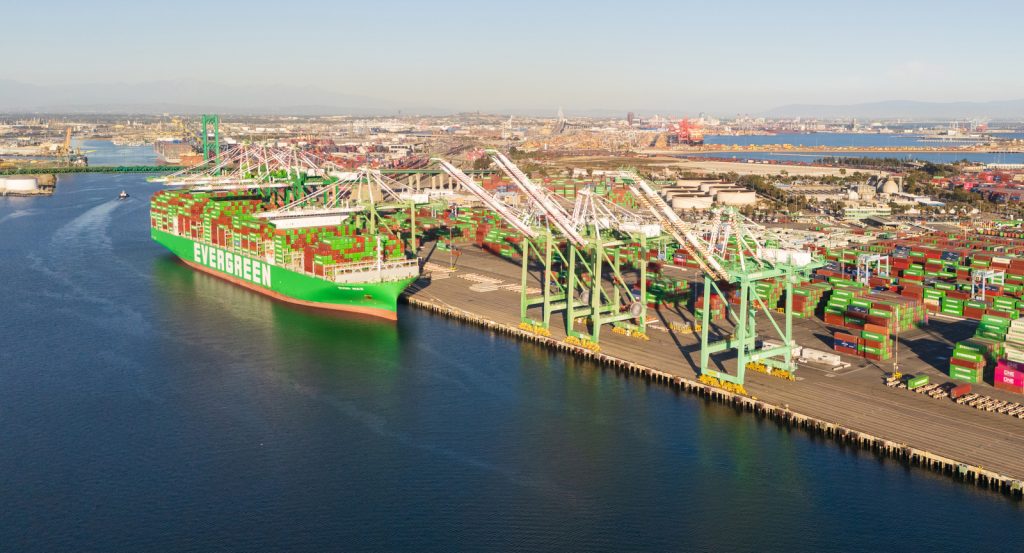
Import volumes at major U.S. container ports are expected to decline year-over-year through the first half of 2026, according to the Global Port Tracker report released February 9 by the National Retail Federation (NRF) and Hackett Associates. The NRF noted that tariff impacts remain a primary factor influencing U.S. inbound trade. Overall, the report projects a 2% year‑over‑year decrease in the first half of 2026. The most significant declines are expected in March and April, followed by modest rebounds in May and June.
Adding to the uncertain outlook is the pending U.S. Supreme Court decision on tariff authority, which analysts say is prolonging unpredictability. The possibility of new duties being introduced – regardless of the Court’s ruling – remains a sizeable risk factor.
“With tariffs still a matter of debate in the courts and in Congress, their effect on imports is being clearly seen,” NRF Vice President for Supply Chain and Customs Policy Jonathan Gold said.
Tariff fluctuations have already contributed to declines late last year. December 2025 volumes fell by -6.6% year-over-year, and full‑year volumes ended slightly lower at -0.4%, though performance exceeded earlier NRF projections.
“The continuing use of tariffs against friend and foe alike combined with the uncertainty of when or if they will be implemented makes trade forecasting very difficult,” Hackett Associates Founder Ben Hackett pointed out.
A similarly cautious tone appears in the February Global Shipping Report from Descartes. The firm reported that U.S. container imports in January declined by -6.8% year‑over‑year but remained above the six‑year average. Descartes described this to reflect “a more normalized trade environment.”
In December 2025, Descartes reported that year‑over‑year imports from the top 10 countries of origin declined -8.4%. Comparing December to January import figures, the report showed growth at 7%. China-origin volumes recorded 9.3% growth, followed by Thailand at 8.6% and Vietnam at 4.8%. India led all origins with a 22% increase. In recent developments, the U.S. and India released a joint statement on February 9 announcing a new trade deal between both nations. Italy and South Korea were the only countries of origin to register month‑over‑month declines, at -16.4% and -1.7%, respectively.
“Entering 2026, trade policy and geopolitical risk continue to create uncertainty for global supply chains,” said Jackson Wood, Director of Industry Strategy at Descartes. “While these factors contribute to a cautious outlook for global trade, January 2026 volumes were slightly above the six-year average for the month, appearing to reflect a more normalized trade environment as U.S. importers become more conditioned to persistent volatility.”