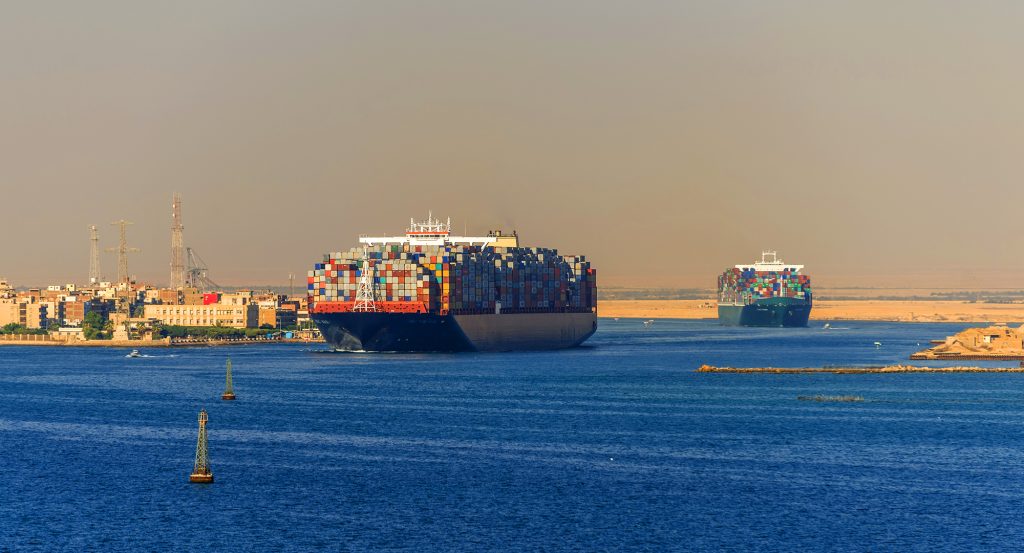
Maersk and Hapag-Lloyd, partners in the Gemini Cooperation, have announced that several of their upcoming joint services will again be diverted from the Trans‑Suez Canal route to the Cape of Good Hope. The move follows only weeks after the February restart of their Red Sea service, highlighting continued volatility in the region.
In an advisory to customers dated February 27, Maersk cited “unforeseen constraints” in the Red Sea and confirmed that sailings on both the ME11 and MECL services would be rerouted around the Cape.
According to Maersk’s notice, the ME11 service which links India and the Middle East with the Mediterranean and North Europe, will see three Westbound and four Eastbound sailings diverted. The MECL service, which connects the Middle East and India with the U.S. East Coast, will have three westbound and three eastbound sailings redirected. These changes come after CMA CGM had already announced a return of its services back to the Cape of Good Hope route on January 20.
In broader security developments, the European Union will be extending its maritime protection mission in the Red Sea region until February 28, 2027. According to a report by gCaptain, the EU will allocate €15 million to support the operation this year, following the €17m allocated for the operation in the previous year. The naval mission, EUNAVFOR Aspides, was launched in February 2024 to safeguard commercial shipping transiting the region.
Despite ongoing disruptions, global schedule reliability held steady in January 2026. As reported by Sea‑Intelligence, reliability remained unchanged month‑over‑month at 62.4 percent, marking the strongest January performance recorded in six years.
Source: Maersk, CMA CGM, gCaptain, Sea-Intelligence