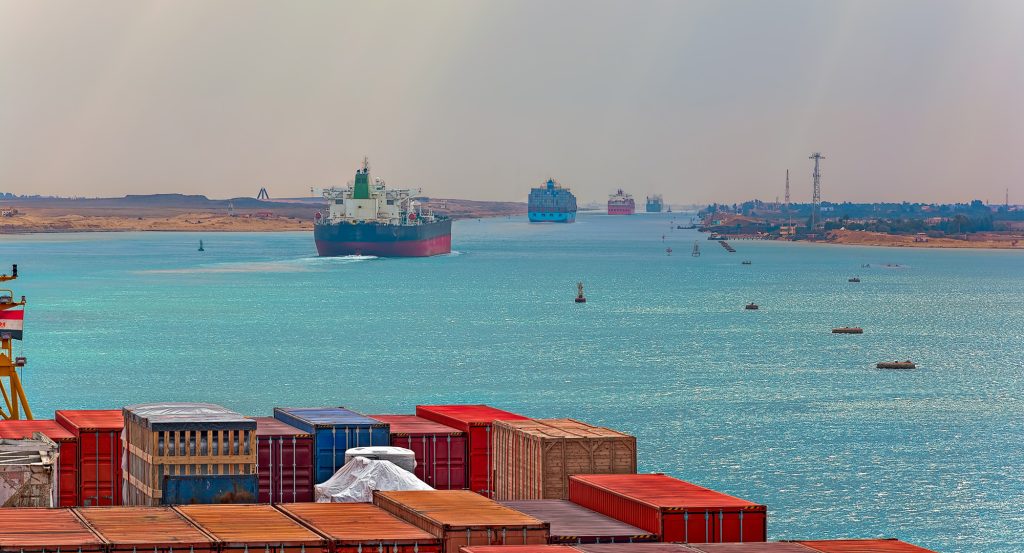
Shipping traffic through the Suez Canal remains significantly below pre-crisis levels, with activity approximately 60% lower than the same week in 2023, according to BIMCO. As reported by splash247, more than 100 attacks on commercial vessels have occurred since November 2023, impacting global trade routes.
Container shipping has been hit hardest. Fourth-quarter 2025 transits were down 86% compared with 2023, marking the steepest decline among all shipping sectors. According to a report from ShippingWatch, the downturn in Suez traffic began in January 2024 and has persisted despite recent efforts to restore confidence in the corridor.
Matthew Burgess, Shipco’s Vice President, LCL USA, noted in November that a return to Suez transits remained uncertain. His assessment aligns with recent commentary cited in ShippingWatch’s report of BIMCO’s Chief Shipping Analyst, Niels Rasmussen who shared that ship transits are more likely now than at any point in the past two years. Rasmussen remarked that a return to Suez transits would deliver financial benefits for carriers, although it could also reduce container ship demand by as much as 10%.
While a limited number of Red Sea and Suez Canal transits have resumed on a trial basis, most container carriers continue to avoid the corridor. Ocean carrier CMA CGA was the first alliance-operated carrier to restart crossings, with support provided by French naval escorts. ShippingWatch reported that although war risk premiums have eased, insurance costs remain high enough to discourage the resumption of canal transits.
Meanwhile, Sea-Intelligence reports that shippers are front-loading cargo on Asia-North Europe and Asia-Mediterranean routes to mitigate delays caused by extended transit times due to the Red Sea diversions and to get ahead of Chinese Lunar New Year factory shutdowns.
Source: splash247.com, ShippingWatch, Sea-Intelligence