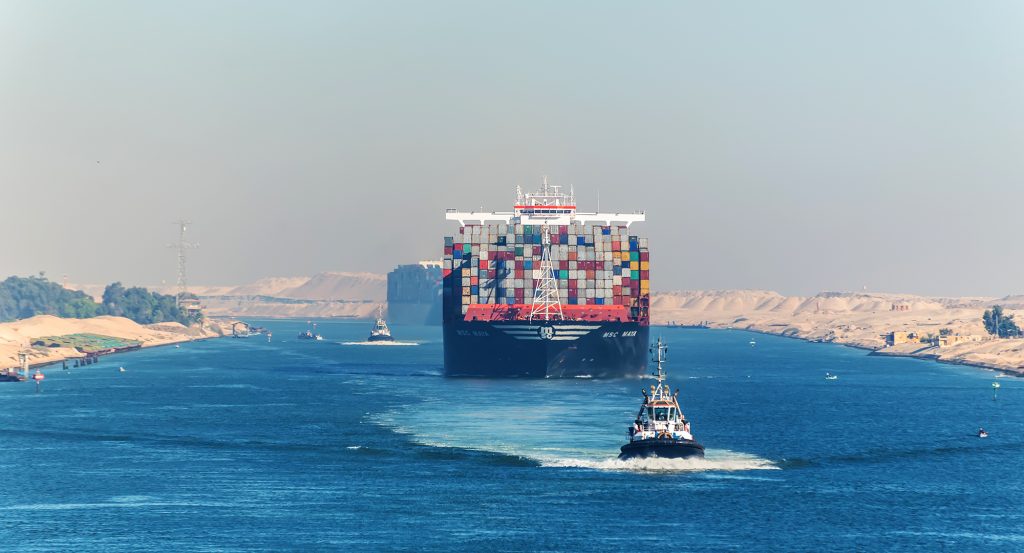
The latest escalation in Middle East tensions has dealt a significant setback to the container sector’s gradual return to the Red Sea, intensifying pressure on already strained global trade corridors. Following the February 28 military offensive on Iran, MarineTraffic reported on X that vessel traffic through the Strait of Hormuz has fallen by 70%.
Assessing the evolving implications, Peter Sand, Chief Analyst at Xeneta, noted in a press release: “The repercussions of the joint military operation by the U.S. and Israel against Iran and subsequent retaliatory action will see the further weaponization of trade and shatter hopes of a largescale return of container shipping to the Red Sea in 2026.”
Sand emphasized the likelihood of Houthi militia resuming attacks, adding: “If Houthi militia resume attacks, as now seems likely, carriers will reverse the decision to return services to the Red Sea and prioritize the safety of crew, ship and cargo. Any plans for a phased return of container shipping to the Red Sea in 2026 will be shelved until the security situation becomes clearer.”
Major carriers had already been operating with heightened caution. Last month, CMA CGM announced its decision to revert services to the Cape of Good Hope route. More recently, Gemini Cooperation partners, Maersk and Hapag-Lloyd, followed suit, advising customers on February 27 that upcoming ME11 (Middle East–India to Mediterranean) and MECL (Middle East–India to U.S. East Coast) sailings would divert from the Suez Canal and route via the Cape of Good Hope. The decision came only shortly after their February restart of Red Sea transits. Maersk has since confirmed in a March 1 update that all ME11 and MECL sailings will now follow the Cape of Good Hope route.
In broader security developments, the European Union has extended its Red Sea maritime protection mission, EUNAVFOR Aspides, through February 28, 2027. The naval mission, launched in February 2024 to safeguard commercial shipping, will receive €15 million in EU funding this year, according to reporting from gCaptain. This follows the €17m allocated to the mission last year.
Understand the impact of chokepoint disruptions on global freight—and what resilient partner networks can do to reduce uncertainty.