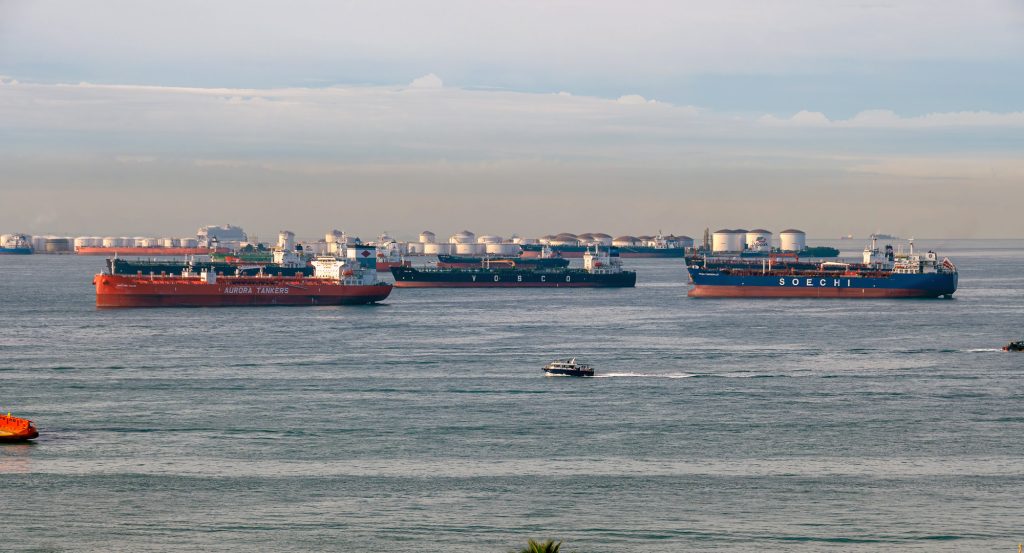
In a March 11 press release, the International Energy Agency (IEA) announced that its 34 member countries had agreed to release 400 million barrels of oil from emergency reserves to help stabilize markets disrupted by the expanding conflict in the Middle East.
According to the IEA’s latest Oil Market Report, the war has triggered “the largest supply disruption in the history of the global oil market”, with limited alternatives to “bypass the world’s most critical oil transit chokepoint”. The agency noted that both producers and consumers are increasingly “feeling the strain”.
Market disruption are extending beyond crude oil supply. The suspension of flights at major airports in the Middle East, combined with downstream impacts on hubs elsewhere, has sharply reduced global jet fuel demand. This has forced refiners to cut output, further tightening already constrained petrochemical exports from the Gulf.
As reported by ShippingWatch, Maersk CEO Vincent Clerc warned that a prolonged closure of the Strait of Hormuz could create an additional bottleneck due to disrupted fuel flows. While global oil supply may be sufficient, the ability to deliver bunker fuel to the right ports at the right time could become a significant challenge. Interrupted fuel flows could create regional fuel shortages, requiring ocean carriers to strategically reposition fuel to maintain sailing schedules.
Key Gulf logistics hubs including Jebel Ali and Abu Dhabi are already experiencing operational impacts, according to ShippingWatch’s report. Tt said Clerc noting that short term workarounds are manageable, but cautioned that extended disruption could lead to congestion and additional stress across global supply chains
Given that a large share of Gulf oil is destined for Asian markets, a sustained disruption could ripple through Asian economies, driving higher operating costs and increased supply uncertainty.
Separately, gCaptain reported that the Joint Maritime Information Center (JMIC) expects the threat environment in the Arabian Gulf and Strait of Hormuz to remain highly volatile in the coming days. Risks from missiles, drones, and unmanned surface vessels continue to threaten commercial shipping.
Source: International Energy Agency, ShippingWatch, gCaptain