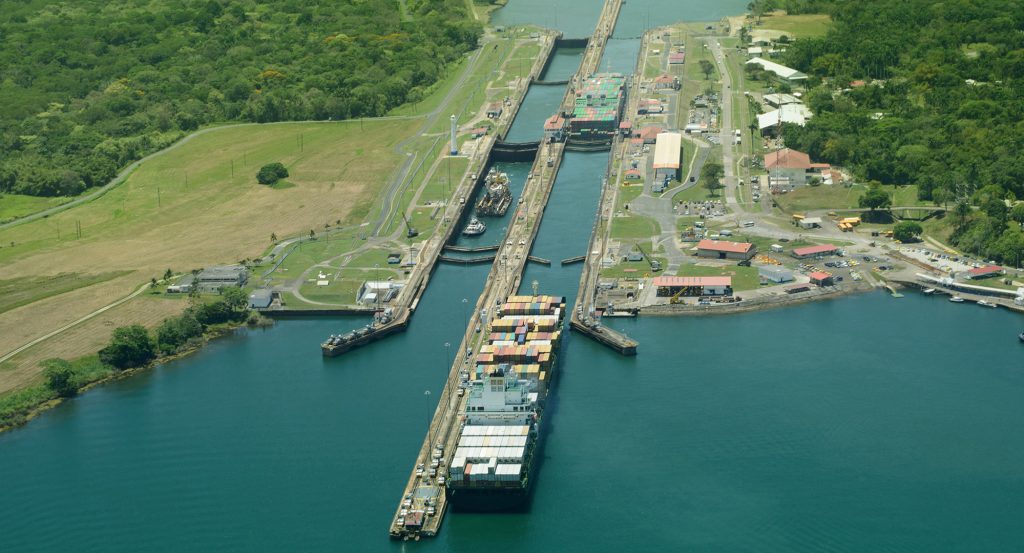
The Panama Canal handles approximately 5% of global trade and serves as a critical gateway for U.S. supply chains, connecting Asian manufacturing hubs with ports along the U.S. East and Gulf Coasts, according to reporting by American Shipper. Data from the U.S. International Trade Administration estimated that 72% of vessels transiting the canal are either bound for or departing from U.S. ports.
The Panama Canal Authority (ACP)’s additional measures to reduce daily vessel transits in early September, alongside lowered draft restrictions will constrain vessel transits and limit container vessel capacity even further.
More recently, reduced slot availability has intensified the competition for reservations. According to reporting from The Maritime Executive, slot auction prices have reached record-breaking levels.
The canal restrictions also come at a time when global vessel capacity is under significant pressure. Around 4.3 million TEUs has been tied up due to port congestion worldwide, with more than half concentrated in East Asia, due to weather-related disruptions at key Chinese ports. Combined with sustained strength in U.S. import demand, these conditions have worsened vessel capacity shortages across Asia-U.S. East and Gulf Coast trade lanes, placing even more pressure on freight rates.
According to Xeneta, Asia-U.S. East Coast container rates have increased significantly since the start of the Middle East conflict. This has widened the cost gap between U.S. East Coast and West Coast routings, Xeneta’s Chief Analyst, Peter Sands noted. “If a shipper has the flexibility of importing goods into U.S. West Coast instead of U.S. East Coast, then they must seriously consider it because there is dramatic savings potential, even if it means a heavier reliance on truck and rail to reach the final destination,” he said.
Source: Panama Canal Authority, Maritime Executive, American Shipper, Xeneta