East Asia Bottlenecks Deepen Global Port Congestion, 4.3 Million TEUs Tied Up | ShipcoViewpoint

Over 4.3 million TEU of vessel capacity are currently tied up in port congestion, representing 12.6% of the global fleet capacity, according to Linerlytica. “In terms of total TEU, the stranded capacity is higher now compared to the previous peak of 4.0m TEU reached during the COVID pandemic in 2022,” the analyst assessed.

Record levels of port congestion, particularly across East Asia, have removed significant container vessel capacity from the market, said Linerlytica, contributing to higher freight rates and prolonged transit delays.

Further, a series of tropical storms have upended port operations and vessel schedules across China. The disruption has been particularly severe in China’s largest container gateways which are experiencing substantial vessel backlogs and extended waiting times. 

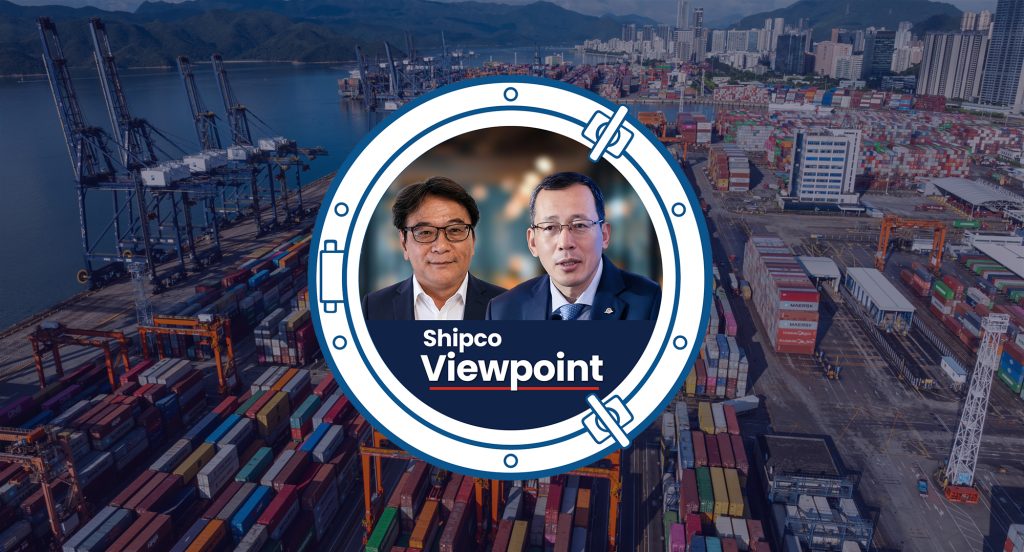
“The port congestion is much more serious in Shanghai and Ningbo, which were both impacted by 2 typhoons, not forgetting the significant container throughputs handled at these two ports, which were ranked first and third respectively in the 2025 global container port rankings,” said Carl Zhao, Shipco’s Regional Director for North China.

The delays to vessels calling at ports are also affecting landside operations, placing additional pressure on container terminals and export warehouses. “The normal timeline for when terminals start allowing containers gate-in to vessel departure is five to seven days. However, due to the upsurge of containers in the terminal, this timeline is now squeezed to 3-4 days,” Zhao explained. He added: “There are also many containers loaded in the export warehouses but can’t be delivered to the terminal. This has resulted in overcrowding at the export warehouses.”

According to Herbert Lee, Shipco’s Regional Director for Hong Kong & South China, the disruption is now extending well beyond Shanghai and Ningbo, creating delays throughout regional shipping networks. “Although this year’s Typhoon season has not had a significant direct impact on Hong Kong and South China, it has carried through the network and this has affected ocean freight services considerably,” Lee said.

Most ocean vessels call at South China ports after Shanghai and Ningbo. “As a result, several services have experienced substantial delays, such as the Ocean Alliance’s Europe service (LL3),” Lee explained.

Beyond direct vessel calls, the congestion is disrupting feeder-dependent cargo movements. “Many South China shipments rely on feeder connections to Shanghai before connecting to ocean vessels for their final destinations, such as cargo moving from Xiamen to Chennai,” Lee shared. He added that vessel delays and port omissions have created significant congestion at CY terminals in Shenzhen.

Sea-Intelligence’s June Global Schedule Reliability report showed on-performance at 62.6%, well below the 70-80% reliability levels typically seen before the pandemic, highlighting the ongoing impact of congestion and service disruptions across the market.

Market conditions could face further pressure as Typhoon Saudel is expected to make landfall in China’s Zhejiang and Fujian provinces on August 28, according to multiple news reports.

Source: Linerlytica, Shipco Transport

“Under the current situation, our teams are focused on helping customers and manufactures understand the challenges caused by the congestion. We recommend that customers plan well for the delivery of their export shipments to the warehouses. We also encourage customers to remain flexible in carrier selection and consider services that have available space and predictable schedules, rather than waiting for their usual carrier options. As some carriers continue to omit Shanghai calls, adaptability will be critical to keeping cargo moving.”

Carl Zhao
Regional Director, North China
"We recommend that customers remain open to alternative carrier and vessel options whenever significant schedule delays are identified. Where vessel delays are known in advance, our teams work closely with customers to adjust their cargo delivery schedule. In some cases, delivering cargo to the warehouse one or two days earlier may allow shipments to be loaded onto vessels that were delayed from the previous week, helping to avoid further rollovers.

Close coordination, flexibility in carrier selection, and early planning are essential in the current environment. Customers who are prepared to adjust booking arrangements and delivery schedules will be better positioned to mitigate delays, control costs, and minimize disruption to their shipments."

Herbert Lee
Regional Director, Hong Kong & South China
Categories

  Related Topics:

Privacy Overview

This website uses cookies so that we can provide you with the best user experience possible. Cookie information is stored in your browser and performs functions such as recognising you when you return to our website and helping our team to understand which sections of the website you find most interesting and useful.