
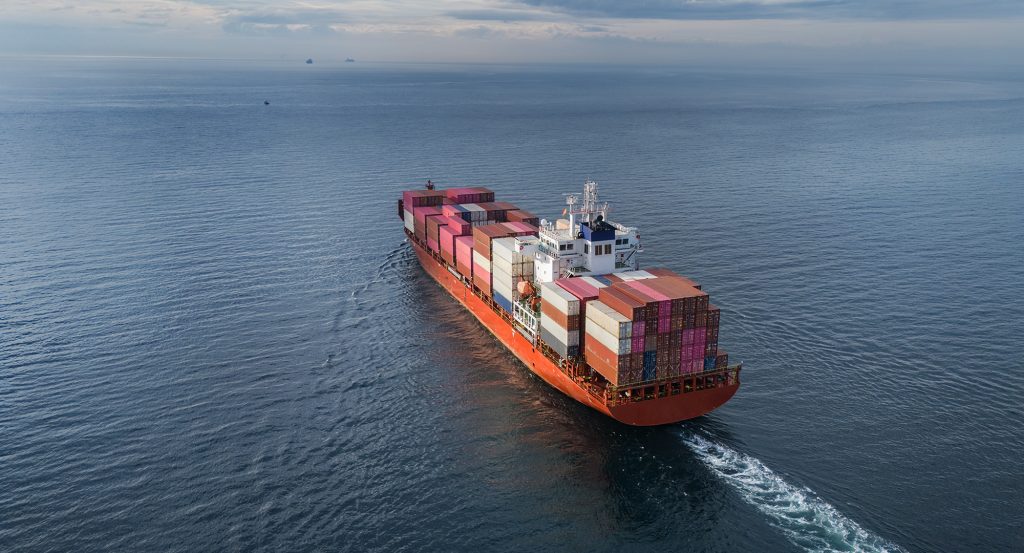
Container shipping between Asia and Europe is continuing to shift back toward the Red Sea and the Suez Canal, although routing patterns are mixed and remain closely tied to security developments across the Middle East.
According to reporting from ShippingWatch, citing Alphaliner data, approximately 63% of the capacity deployed by the ten largest container lines between the Far East and Europe now transit the Red Sea. BIMCO had also recently reported that more than 50% of containership capacity resumed passage through the Suez Canal in the first two weeks of October.
Five of the ten largest container lines are now transiting via the Suez Canal. The number is expected to rise to eight as Premier Alliance members implement planned service changes, according to reporting by ShippingWatch. This means Evergreen and ZIM would then be the only major carriers yet to resume passage.
Reporting by The Loadstar noted that some services are transiting the Suez Canal Westbound to Europe while sailing around the Cape of Good Hope route on the return leg to Asia.
Alphaliner data, cited by ShippingWatch, showed that in capacity terms, Red Sea services represented approximately 70% of Far East-Mediterranean tonnage, compared with 58% on trades which served Northern Europe.
For carriers, passage via the Suez offers a strong operational advantage. Alphaliner estimated that using the canal instead of sailing around the Cape of Good Hope, shortened voyages by around two weeks. In addition to lowered fuel consumption, it also reduced the exposure of vessels to severe weather conditions, which had accounted for 35% of container losses in 2024.
Security conditions in the Red Sea remain a key consideration for shipping lines. Recent incidents such as the attacks on two Singapore-registered containerships struck while passing through the Strait, highlight ongoing risks to commercial shipping. The UK Maritime Trade Operations (UKMTO) said it has become increasingly difficult to determine the true number of attacks in the Strait of Hormuz, as many targeted vessels are no longer reporting incidents to the agency, splash247 reported.
Meanwhile, the cost of shipping crude oil from the Middle East Gulf to Asia has surged to more than $37 per barrel, over five times the level before the war began. “Typically, transport makes up a small proportion of the overall price of oil, but when shipping becomes more expensive, costs can mount across the supply chain”, the International Energy Agency (IEA) said.
The IEA noted that the higher cost of transporting crude and oil products has Asia particularly exposed because refiners depend heavily on crude originating in the Middle East.
Source: ShippingWatch, The Loadstar, splash247, IEA