The conflict involving Iran and the U.S./Israel is moving into its fifth week with growing repercussion for global shipping networks. Limited visibility into operational conditions has led to vessels holding position, rerouting, or bunching at alternative ports, according to the report by Splash247.
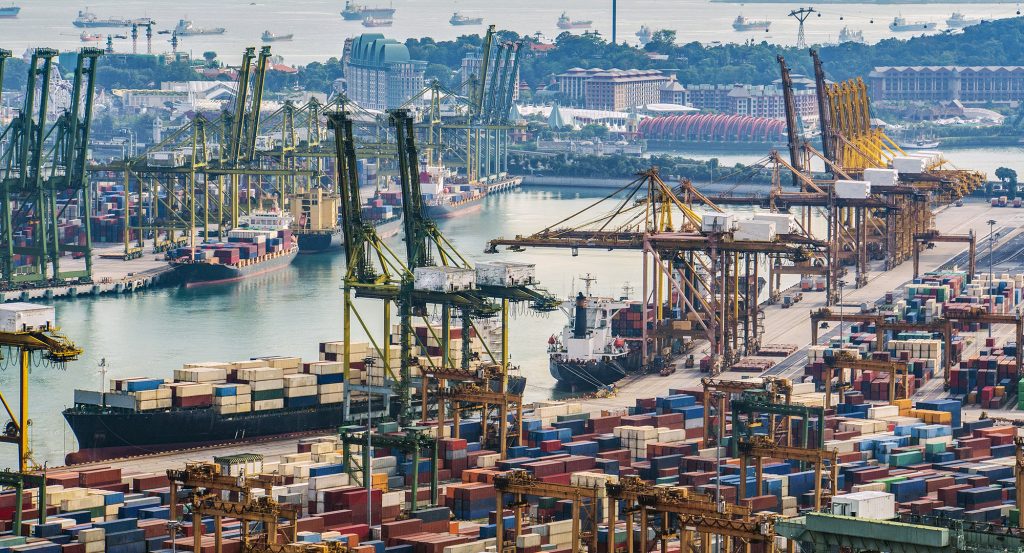
The surge in vessel traffic has strained transshipment hubs and gateway ports, , which were not configured to manage such a sharp increase in demand. Portcast highlighted that the congestion patterns across Southeast and South Asia are not isolated incidents. “This port congestion is not limited to a single country or port. It is happening at the same time across Southeast Asia and South Asia, suggesting a shared cause instead of local port problems,” it said.
Portcast’s data, cited by Splash247 showed that as of March 25, the seven‑day average of waiting vessels at anchorage in Singapore had risen by more than ten ships compared to levels observed before the conflict began.
Xeneta reports that global port congestion has now surpassed 80%. Commenting on the situation, Xeneta Chief Analyst Peter Sand said: “Port congestion continues to spread across ocean supply chains, reaching beyond the epicenter of conflict in the Middle East, particularly at major Asia transshipment hubs. This has clear implications for shippers using services calling at these transshipment hubs, even if their cargo would never touch a Middle East port.”
Ocean carrier executives have also flagged risks around bunker availability. Maersk CEO Vincent Clerc cautioned that any extended closure of the Strait of Hormuz could create another layer of disruption. While Hapag-Lloyd relies less on Asia as a bunkering point than Maersk, CEO Rolf Habben Jansen said the German carrier is closely monitoring bunkering supply conditions as it could still be affected by tightening global supply conditions.