
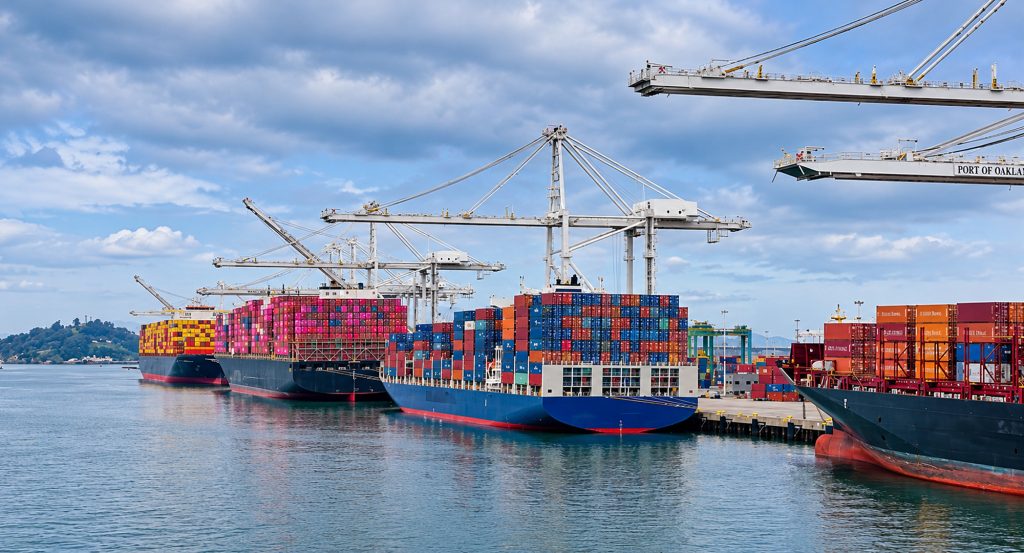
Weekly liner services have deteriorated significantly compared with pre-pandemic operating patterns, according to Sea-Intelligence analysis. Disruption on the deep-sea trades are a combination of factors ranging from blank sailings, vessel delays that cascaded departures into subsequent weeks, services being introduced or withdrawn, to additional loaders being deployed outside regular schedules.
The assessment indicated Asia-Europe trades were experiencing the greatest deterioration in service stability. The data showed that weekly service instability on the Asia-North Europe route has increased by 78% and has risen by 71% on the Asia-Mediterranean route.
According to data from Alphaliner, over 60% of the capacity operated by the ten largest container carriers between the Asia and Europe are being routed through the Red Sea. Taiwanese carrier Evergreen, is the latest carrier restarting its Suez Canal transits after a three-year absence. According to reporting from splash24, citing Linerlytica, the three major carrier alliances consisting of Gemini Cooperation, Ocean Alliance, Premier Alliance, and MSC intend to resume their Suez networks by the first quarter of 2027. At present, Israeli carrier Zim remains the only major line staying on the Cape of Good Hope route.
Volatility in service has also increased across the Trans-Pacific, although to a lesser extent than compared to the Asia-Europe trades. Instability on Asia-U.S. West Coast services are up 48%, while Asia-U.S. East Coast recorded the smallest increase among the major trades at 26%.
Instability in weekly services have made capacity planning more difficult. “For shippers, this constant weekly shifting in available capacity makes it incredibly hard to plan their supply chains. More importantly, these unexpected changes create major bottlenecks at the arrival ports,” said Alan Murphy, CEO of Sea-Intelligence, adding, “It greatly increases the risk of sudden port congestion. This congestion can then lead to longer waiting times for vessels, in turn worsening schedule reliability and lengthening transit times.”
Sea-Intelligence also reported that global schedule on-time performance had dropped to 50.6% September, down from a peak of 64.5% in May. Previously, Xeneta pointed to congestion across key Asian gateways that affected vessel schedules and consequently delays.
Source: Sea-Intelligence, splash247