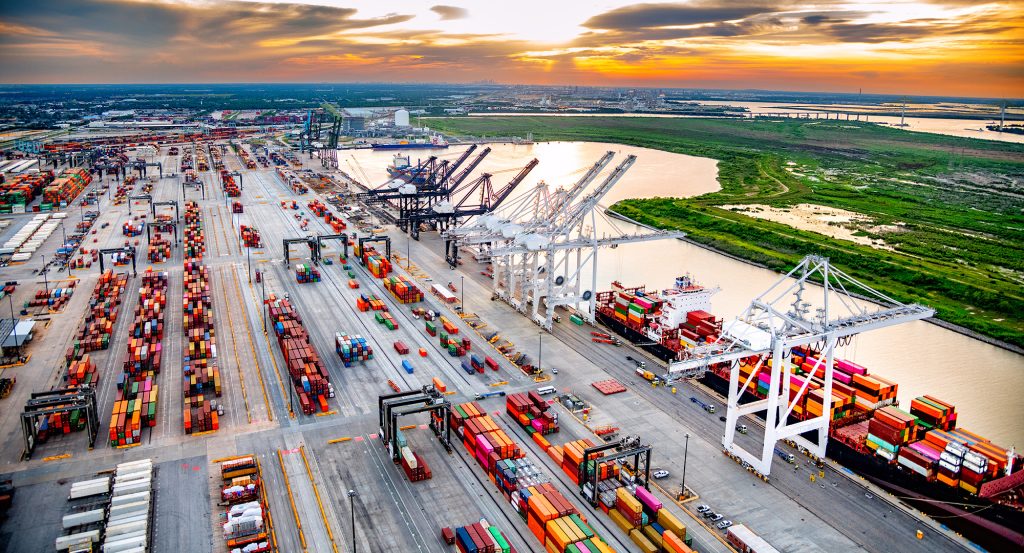
The 2025 Container Port Performance Index (CPPI) reported a slight decline in global port efficiency compared to 2024, with longer vessel turnaround times. The report, jointly produced by the World Bank Group and S&P Global Market Intelligence, attributed this to a combination of geopolitical tensions, shipping disruptions, extreme weather, and market volatility, according to reporting from safety4sea.
East Asia remains the strongest-performing region for container port efficiency, with Chinese ports continuing to dominate the global rankings. Four of the top five ports are in China, with Fuzhou ranked first, followed by Dalian, Salalah (Oman), Mawan, and Chiwan, according to reporting from safety4sea.
As reported by splash247, the CPPI report highlighted the connection between port efficiency and supply chain resilience, noting that high-performing ports were better equipped to absorb disruptions.
Several ports achieved significant performance improvements after addressing structural bottlenecks and investment gaps. Among the strongest performers are Port Elizabeth (South Africa), Khalifa Bin Salman Port (Bahrain), Posorja (Ecuador), Göteborg (Sweden), and Muhammad Bin Qasim (Pakistan). safety4sea also reported gains at Haiphong (Vietnam), Mawan (China), and Kobe (Japan).
Meanwhile, South African ports led year-on-year recovery with Durban, Freeport, and Coega/Ngqura showing marked improvements. Cristobal (Panama), Manzanillo (Mexico), Los Angeles and Charleston (USA), Jebel Ali (UAE), and Vancouver (Canada) also registered significant rebounds, according to reporting by Safety4Sea.
A key emerging challenge identified by the CPPI report’s authors is “burst congestion”. Unlike congestion driven by steady volume growth, this occurrence is caused by clusters of delayed vessel arrivals. Disruptions such as weather events, labor issues, and geopolitical events are forcing vessels out of sequence, resulting in sudden surges that strain terminal capacity, yard operations, and inland transport networks, as reported by splash247.
The joint press release from the World Bank Group and S&P Global noted the increasingly active role of ports in shaping supply chain outcomes. “Ports are not just passively exposed to external shocks; they also dynamically shape how those shocks are transmitted. They can either amplify disruptions or help contain them,” said Bertrand De la Borde, Global Director for Transport and Logistics at the World Bank Group.
Source: safety4sea, splash247, S&P Global, The World Bank