Global reach is easy to state but difficult to achieve. For a freight forwarder, “coverage” truly matters when reflected in execution. Coordination by the origin team keeps cargo moving on schedule, while follow-up at destination prevents delays after arrival. Combined with clear escalation points when changes occur during transit.
In every instance, the NVOCC partner is entrusted with commercially sensitive information. Pricing, volumes, commodity information, actual customer details, routing priorities and more. As such, neutrality is an essential requirement, not a “nice-to-have”.
This directly shapes the level of trust a forwarder places in their partner and its network and underscores the importance of choosing an NVOCC partner with a global and truly neutral network.
What a global neutral NVOCC network means
A neutral NVOCC is centrally positioned between ocean carriers and freight forwarders, arranging ocean and air transport under its own contracts while handling consolidation workflows as part of its core service solutions. The “network” is where the real value shows up, especially when cargo moves across multiple countries, time zones, and handoffs.
In practice, network coverage means consistent and accountable support at both ends of a shipment, including:
- Precise coordination at origin to ensure cargo is received securely and timely
- Complete destination management to prevent delays and ensure prompt cargo release
- Aligned teamwork across regions
- Clear escalation path when changes occur during transit
The true value of neutrality matters most in this system as forwarders share sensitive information about their customers that helps to make shipments run smoothly. A true global, neutral NVOCC network provides real value when a forwarder can be fully transparent with their partner.
Neutrality in NVOCC logistics and why forwarders care
Neutrality sounds simple until you consider what an NVOCC has access to: complete client information, specific service requirements, volume forecasts along with the operational setup that positions a forwarder uniquely in the market. These details reveal how a forwarder runs their business.
A neutral NVOCC model is designed to protect the forwarders’ commercial relationships by keeping the shipper–forwarder relationship intact, while still encouraging transparency, and collaboration.
Neutrality keeps the commercial relationship where it belongs: between the forwarder and the shipper, while the NVOCC supports execution, delivering reliable services behind the scenes.
When neutrality is credible, forwarders tend to:
- Share more accurate forecasts and priorities
- Collaborate on realistic service expectations
- Escalate issues sooner, before a problem becomes more complex
When neutrality is questionable, the pattern reverses. Information flows later, details get filtered, and exception handling becomes reactive. The same network can feel slower because the information flow is restricted.
Shipco’s positioning is built around neutrality in its NVOCC role. In practice, this neutrality supports cleaner working relationships with freight forwarder customers who need global coverage without commercial spillovers.
Global coverage through owned offices, WWA and ACG alliances
Global coverage is a structure that determines who can act on a shipment at origin, who can act at destination, and how quickly an issue moves from “noticed” to “resolved.”
Shipco builds this structure through their own offices and alliance coverage, connecting both through shared operating touchpoints across regions.
A practical way to understand Shipco’s coverage model is to look at it in four linked layers:
Benefits of own offices in execution management
Interaction between offices operating within the same global network reduces ambiguity when shipments require attention. Responsibility is clearer, escalation paths are shorter, and decision-making tends to move faster. This shows up in day-to-day execution, especially around cut-offs, documentation readiness, and unplanned changes that require quick coordination.
WWA Alliance coverage that extends Shipco’s reach
In markets not served by Shipco offices, coverage is supported through WorldWide Alliance (WWA) partner offices. The value of this layer is reach, with a known execution partner in place. This structure is especially important for forwarders whose customer base sources from multiple countries or shifts destinations, and the shipment still needs consistent handling on both ends.
ACG alliance coverage for global air freight access
Forwarders have greater flexibility with both ocean and air options across the same set of markets. Through the Air CargoGroup (ACG) alliance, Shipco extends its air freight footprint through an alliance structure, which helps when a shipment shifts to air due to lead-time pressure or disruption. That way, forwarders can access air solutions through the same network model rather than setting up separate vendor relationships lane by lane.
End-to-end alignment across origin and destination teams
True coverage is achieved when the origin and destination teams work within the same shipment facts: booking details, receiving status, document readiness, and the destination release plans. Strong alignment reduces repetition, speeds exception handling, and gives forwarders clearer accountability across handoffs.
Freight services beyond LCL for freight forwarders
Shipco extends far beyond ocean LCL, but the neutral NVOCC’s service portfolio is wider. Freight forwarders value this because their customers often do not separate their needs by service option. A shipper/consignee may require ocean LCL for steady replenishment, FCL for promotional spikes, air for urgent replenishment, and inland services to reach final destinations.
Shipco’s broad capabilities are positioned as a complete set of options that help forwarders match a service to shipment requirements:
FCL shipping services
FCL supports higher-volume shipments, consisting of a single commodity along with a factory-to-client cargo handling structure. FCL easily co-exists alongside LCL within the same vendor/client relationship.
Air Freight services 
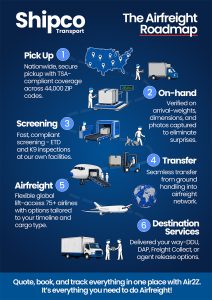
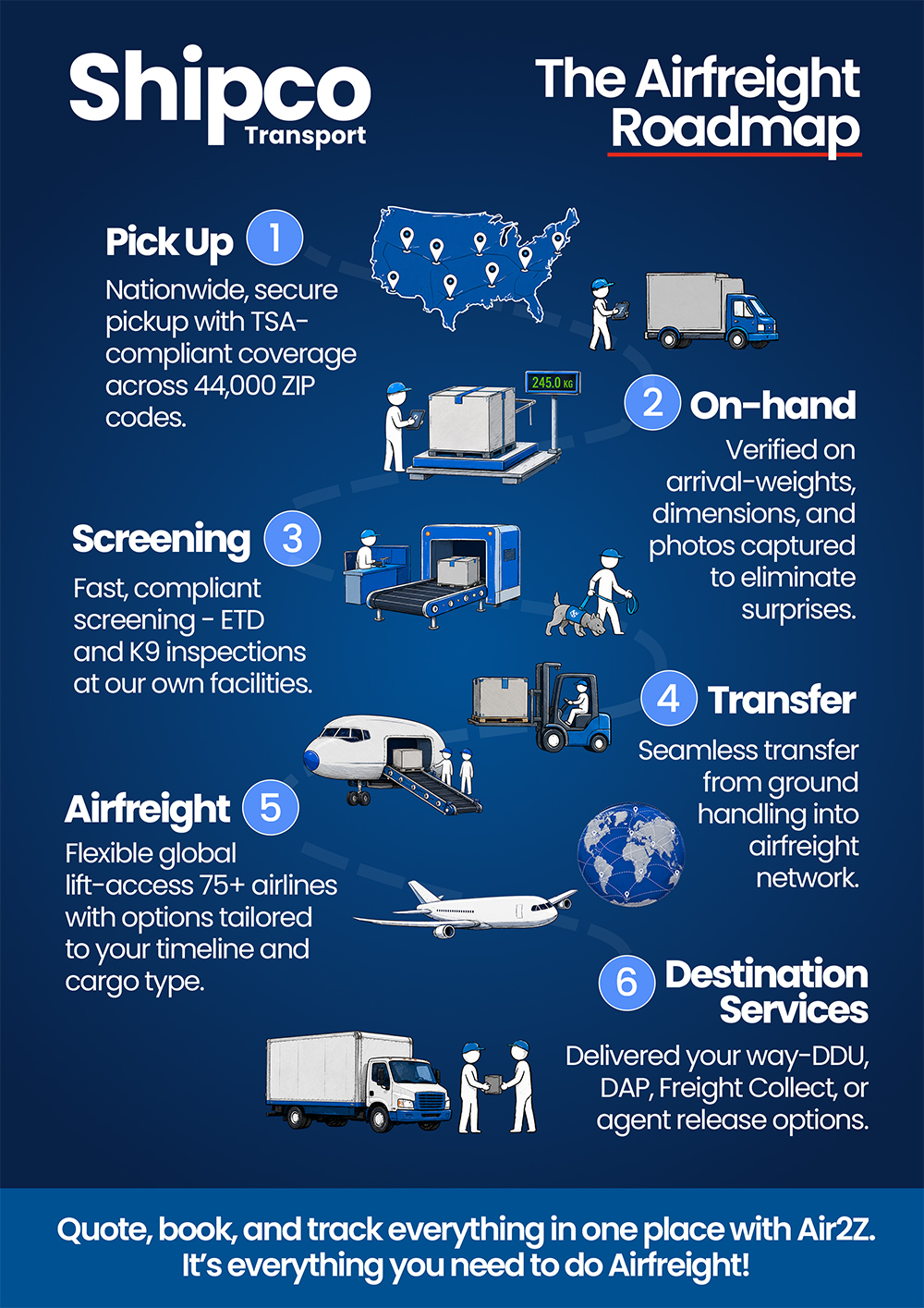
Air Freight is essential for time-sensitive, high-value cargo and provides a safety net for when global disruptions occur on the ocean freight side. Air Freight also supports hybrid planning when a forwarder wants to keep most volume on ocean while protecting critical SKUs with faster uplift.
Hybrid Sea-Air, Air-Sea options
Hybrid shipping provides alternatives when pure ocean schedules become unreliable or when full air costs are difficult to justify for the entire shipment. Forwarders gain access to different routing options to manage timing and cost pressure during volatile periods.
Domestic trucking in the USA
A pickup that fails, arrives late, or is poorly coordinated can wipe out the advantages of a well-planned ocean or air shipment. Domestic coverage helps forwarders maintain control over the shipment before it even reaches the port or airport.

U.S. IPI capabilities for inland destinations
IPI solutions are vital when the final delivery point is not near the port of entry. Inland point coverage affects transit time, cost exposure, and the number of parties involved. A strong IPI structure helps forwarders maintain predictability beyond coastal gateways.
Hazardous cargo capabilities and compliance support
Hazardous cargo adds complexity to compliance and greater consequences for documentation errors. Dedicated capability and clear controls help forwarders reduce the risk and delays associated with misdeclaration, labelling issues, or incomplete paperwork.
Household goods services
Shipments of household goods require careful handling, specific documentation discipline, and detailed coordination across origin and destination. This is a specialized commodity where operational consistency matters as much as cost.
Digital freight tools and e-services
A network can be global and still feel slow if every change requires email chains and manual follow‑up. Shipco’s eBusiness solutions focus on removing steps from daily workflows, including: Online access to rates, bookings, sailing schedules combined with up-to-the-minute track & trace capabilities, and documentation submission, amendments, approvals.
Self-serve quoting based on live rates
Self-serve quoting supports faster planning, quicker customer replies, and better comparison between routing options. It also eliminates delays caused by waiting for email responses to quote requests.
Online bookings
Online booking tools standardize information upfront, which supports cleaner execution downstream.
Schedule lookup tools
Schedule lookup supports planning and expectation-setting. Visibility into sailing options helps forwarders make decisions earlier, especially when the preferred schedule changes.
Shipment tracking and real-time visibility
Milestone visibility supports proactive updates and faster exception handling. A forwarder can manage customer expectations better when they can see status changes early and respond before a delay becomes a surprise.
Online shipping instructions
Online shipping instructions support accuracy and speed in documentation flow. This reduces avoidable holds caused by mismatched or incomplete data.
Documentation support and amendment workflows
Documentation changes are a routine part of real operations, not rare occurrences or exceptions. Tools that support modifications without the need for manual escalation reduce delays when corrections are needed quickly.
Conclusion: Trust and reach without trade-offs
A global network works best when forwarders can share information early and act on it quickly. Neutrality protects the commercial relationship; coverage provides reach; services beyond LCL provide flexibility; and digital tools provide ease and time-saving functionalities.
Shipco’s model captures all together in a way that forwarders can operationalize: a neutral NVOCC approach, owned-office accountability where present, alliance reach where needed, a broader service portfolio, and eBusiness capabilities delivering efficiencies in the day-to-day execution.