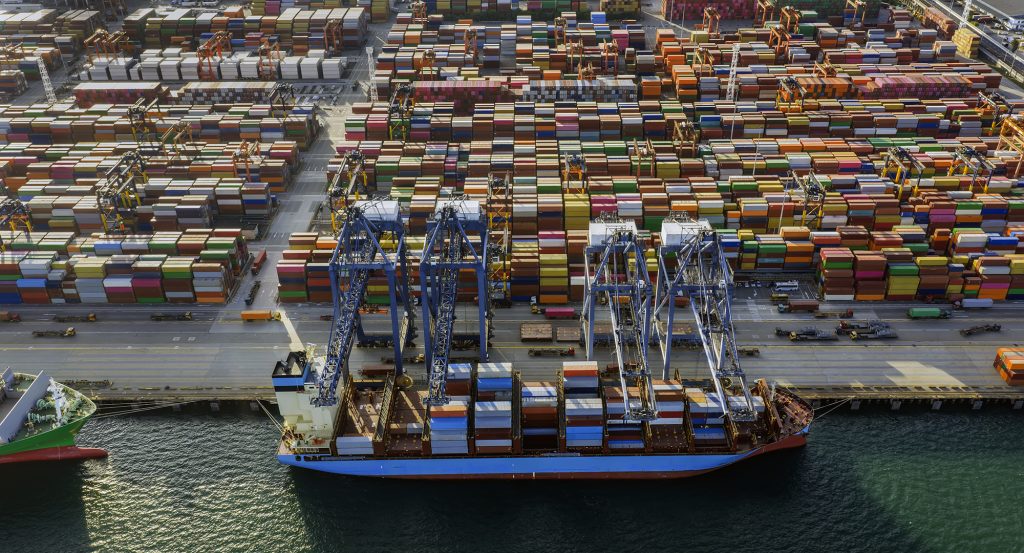
Global schedule reliability suffered a significant monthly decline in July as congestion intensified across major Asian container hubs. According to data from Sea-Intelligence, schedule reliability fell to 56.4%, down 6.1 percentage points from June, while average delays for late vessel arrivals have exceeded six days.
The fallout from congestion has been severe at several of the region’s largest gateways. Shanghai recorded schedule reliability of just 21%. Ningbo, which overtook Singapore in H1 2026 to become the world’s second-busiest container port, posted reliability of 34.6%. Singapore recorded reliability at 43.2%.
According to Sea-Intelligence, all 14 of Asia’s busiest container ports had a worse on-time vessel arrival record in July than in the previous month, with Yantian showing the biggest month-on-month decrease, followed by Hong Kong and Ningbo.
“With the region’s busiest ports operating with more than half of their incoming vessels delayed, this backlog will naturally cascade through the maritime network, likely triggering a new wave of delays for critical head‑haul trade lanes in the coming months,” warned Alan Murphy, CEO, Sea-Intelligence.
The fact that port congestion is getting worse is also having a significant effect on the amount of shipping capacity available. As splash247 reported, citing data from Sea-Intelligence, about 2.3 million TEU of capacity is currently being held up by delays, which is equivalent to around 6.6% of the entire global containership fleet, compared with 5% in June.
The scale of the disruption highlights how significantly network inefficiencies are affecting supply. As reported by The Loadstar, vessel delays absorbed roughly 2.2% of global fleet capacity before the pandemic, meaning that current levels are now nearly three times what they were in historical times. Although the current level of congestion is helping to take up the available capacity, analysts cautions that the market situation could change when port operations return to normal.
At the same time, carriers continue introducing new tonnage and gradually returning services to the Suez Canal, reducing the need for longer Cape of Good Hope routings. According to reporting from splash247, Sea-Intelligence estimates that a broader return to Suez Canal routings, combined with continued fleet growth, could reduce effective demand for vessel capacity. With the global container shipping orderbook standing at approximately 40% of the existing fleet, the industry remains focused on the potential for renewed overcapacity pressures once current congestion eases.
Sources: Sea-Intelligence, Splash247, The Loadstar