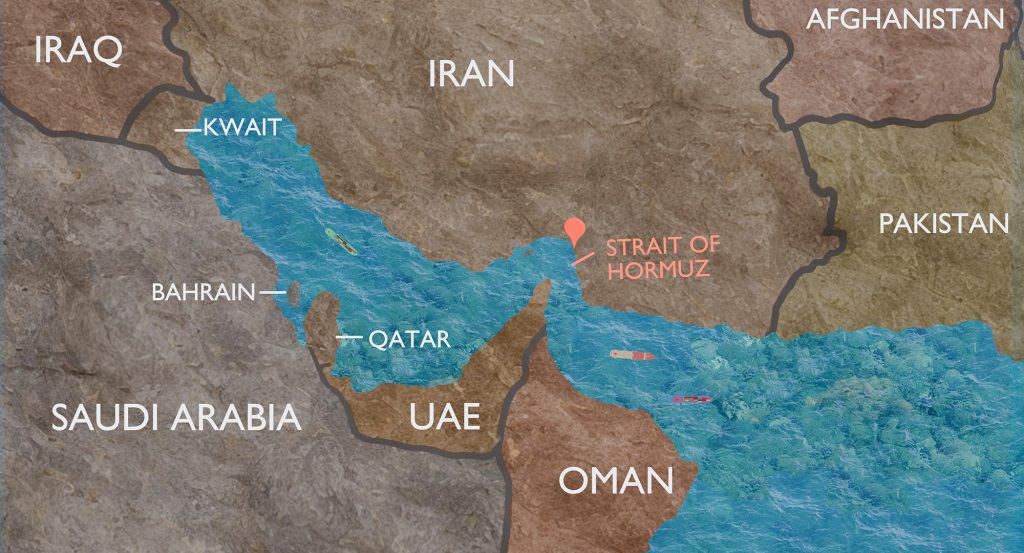
In its latest advisory, the Joint Maritime Information Center (JMIC) has maintained its classification of the maritime threat level in the Strait of Hormuz at “severe”.
The latest flare-up between the U.S. and Iran followed reports that Iran fired on three commercial vessels transiting the Strait of Hormuz on July 6 and 7 during the interim ceasefire. Iran has alleged the ships were attempting to transit the Strait without authorization. Since then, hostilities between the U.S. and Iran have grown, with the latest attack involving a container ship on Saturday.
According to statements from U.S. Central Command (CENTCOM), U.S. forces carried out a new round of offensive strikes against Iran on Sunday aimed at limiting Iran’s capacity to disrupt international maritime traffic through the Strait.
Reporting from The Loadstar indicated that additional strikes by Iran have affected facilities across Bahrain, Kuwait, Qatar, U.A.E., Oman, and Jordan. The same report noted that renewed instability has led shippers in the Gulf to turn again to Middle East landbridge routes to maintain cargo flows.
Meanwhile, according to CNBC reporting, the U.S. is expected to reinstate blockades on Iranian ports near the Strait, further tightening conditions in a corridor that handles approximately 20% of global oil trade.
In a released statement, the International Maritime Organization (IMO) called the attacks “reckless”, noting that “nearly 6,000 seafarers remain stranded on board vessels unable to depart the Persian Gulf safely”. An IMO-led evacuation initiative previously allowed some vessels to exit the Gulf, but that effort was paused following a separate incident.
According to reporting from American Shipper, the renewed instability is impacting energy markets, with oil, natural gas, and refined fuels all seeing upward pressure as fears of supply disruptions intensify.
Source: UKMTO, CENTCOM, The Loadstar, CNBC, IMO, American Shipper